
Choosing the right international school in Singapore today means looking beyond academic results alone. Parents are increasingly asking how schools balance AI and technology, online safety, wellbeing and real human connection, while still preparing students for a rapidly changing future.
At XCL World Academy, technology is embraced, but never at the expense of childhood, character, or community.
In a recent MoneyFM Saturday Mornings Show interview, hosts Glenn van Zutphen and Neil Humphreys explored key topics in digital education with Mark Petterson, Secondary Years Principal, and Maria Sweeney, Primary Years Principal at XCL World Academy. The conversation focused on digital citizenship, online safety, and building resilience, offering practical insights on how schools and families can work together to help children navigate technology responsibly while maintaining a healthy balance with real-world learning, play, and social interaction.
Maria and Marks shared beliefs are simple yet powerful: technology should enhance learning, not replace human connection.
Healthy Technology Use Starts With Balance and Purpose
One of the biggest questions parents ask today is simple, yet complex: how much technology is too much?
According to Mark, there is no universal rulebook.
“Parents are grappling with how to stay ahead of technology because it is evolving so rapidly. Digital fluency is important, but like most things in life, technology is best in moderation.”
At XCL World Academy, the focus is not on rejecting technology, but on using it responsibly and purposefully. Schools and parents work together to share this responsibility, recognising that every household and every child is different.
Technology in the Early and Primary Years: Engagement Over Entertainment
In the Early and Primary Years, Maria emphasises that technology should never replace play, movement and hands-on learning.
“The younger the child, the less they use technology. Play is the work of young children. It’s how they make sense of the world.”
At XCL World Academy, technology in the Primary Years is:
• Intentional, not constant
• Used to deepen understanding, not distract
• Designed to support vocabulary development, coordination and real-world learning
A key question guides every decision:
Is technology being used for entertainment, or for meaningful engagement?
When technology enhances learning, it has a place. When it replaces sensory exploration and social interaction, it does not.
From Command to Consent: Guiding Teenagers in the Digital World

For adolescents, managing technology is less about strict rules and more about trust, dialogue and understanding.
Mark explains that teenagers are wired to take risks, making simple commands ineffective.
“It’s about shifting from command to consent. Young people want to understand the why behind boundaries.”
Rather than static rules that quickly become outdated, it is important for us to focus on:
• Open conversations about online boundaries
• Clear explanations around safety and wellbeing
• Helping students understand the long-term impact of their digital choices
When students understand the rationale, they are more likely to make responsible decisions independently.
A Technology-Responsible School Environment
Early last year, XCL World Academy introduced a technology-responsible policy in the Secondary Years.
Between 8:00am and 4:30pm:
• School-issued laptops are used only under teacher direction in lessons
• No personal devices, phones, headphones or screens are used during breaks or lunchtime
The outcome has been powerful.
Students are:
• Playing sports during breaks
• Forming activity clubs such as chess clubs and LEGO clubs
• Sitting together, talking and building real friendships
“We’re seeing young people reconnect. Those interpersonal skills are still critical, and technology was getting in the way of that.”
Schools and Parents: The Power of Consistency
A recurring theme in the conversation was the importance of alignment between school and home.
Maria notes that children, especially younger ones, thrive on consistency.
“It’s very difficult when schools have clear parameters, but at home there’s unlimited, non-essential tech use. Healthy habits are built through consistency.”
When parents and schools share similar expectations around technology, children gain clarity, confidence and stronger self-regulation.
Bullying, Cyber Safety and Digital Footprints
While bullying has always existed, the online world introduces new layers of complexity. Mark notes that digital spaces can feel faceless, which can lead young people to say things online that they would never say in person.

At XCL World Academy, teachers adopt a proactive approach that explicitly teaches digital citizenship, online responsibility and awareness of students’ digital footprints and long-term online presence. Parents are encouraged to stay engaged and informed, as independence is important, but maintaining a clear understanding of how children interact online plays a key role in safeguarding their wellbeing.
Preparing Students for AI With Ethics and Humanity
Artificial intelligence is reshaping education, and XCL World Academy is preparing students for this shift through a carefully structured, future-focused approach.
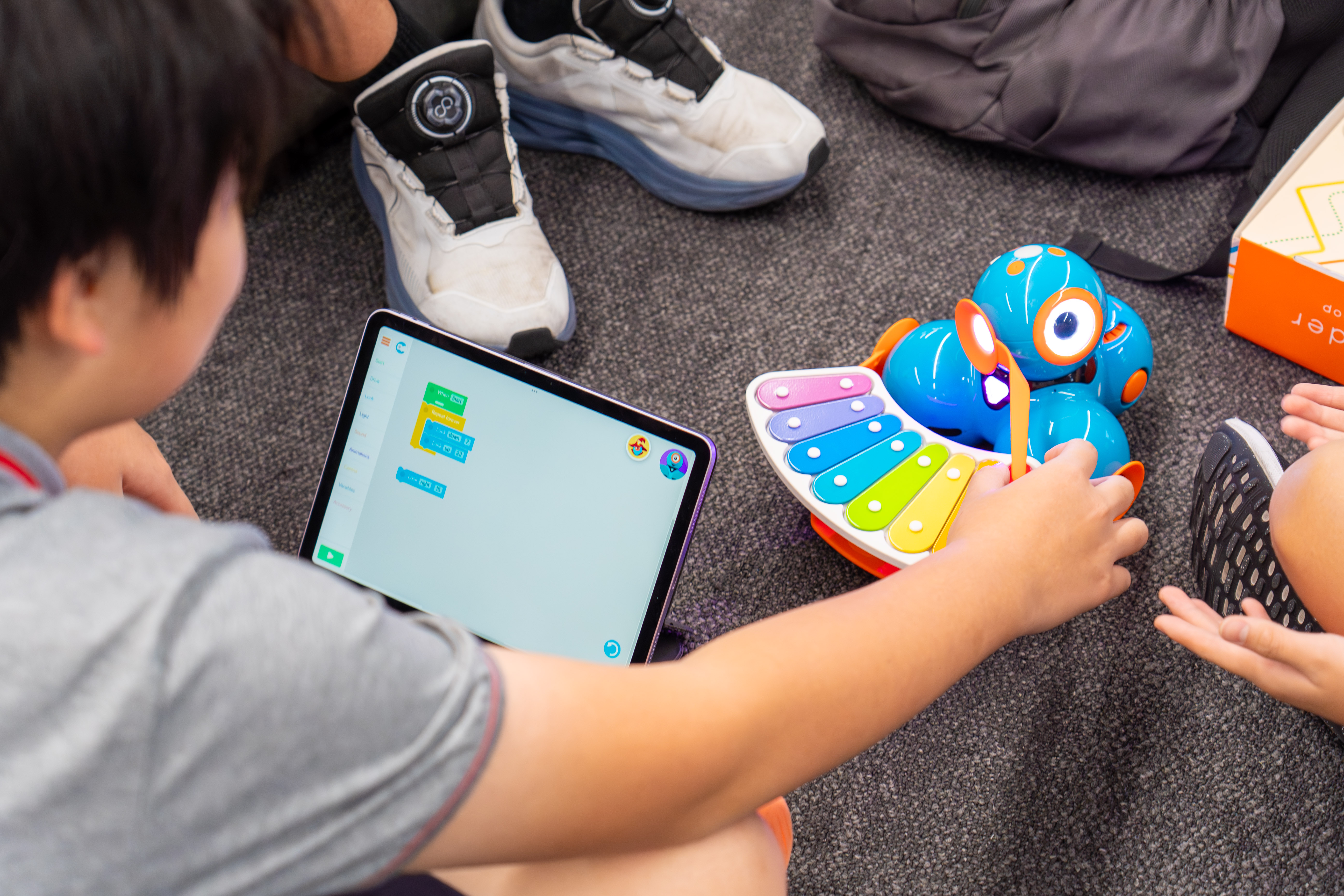
In the Primary Years, XCL World Academy focuses on building the foundations students need to thrive in a technology-driven world, without rushing them into tools. The emphasis is on developing strong thinking habits such as asking meaningful questions, thinking critically and creatively, and making informed judgments. These skills form the basis of how students will later engage with emerging technologies, including artificial intelligence.
This foundation is reinforced through XCLerate, the school’s future skills programme, which begins as early as age 5. XCLerate equips students with the human capabilities and real-life skills that matter most in a technology-driven world, including critical thinking, creativity, ethical decision-making, adaptability, and collaboration. By cultivating these skills from an early age, students grow into not only confident and capable users of technology, but also thoughtful, responsible learners who can apply their knowledge with purpose and impact.
From Grade 6, this exposure is formalised through a dedicated AI programme. The AI Programme by XWA is a structured, project-based, programme that develops both technical and professional skills, preparing students for real-world AI applications and future careers. Through industry mentorship, students go beyond simply learning how to use AI tools. They develop a deeper understanding of how AI works, learn to evaluate accuracy and reliability, ask better questions, and use technology ethically, without replacing independent thought or creativity.
As Maria explains, this approach is underpinned by three enduring human values: empathy, creativity and humility. “AI has no empathy and no humility,” she notes. “These are uniquely human strengths, and they come from real interaction with people.”
Modelling Matters: Adults Set the Tone
One of the most powerful insights from the conversation was the role of adults as role models.
Children may not always follow instructions, but they always notice behaviour.
At XCL World Academy, initiatives such as Sustained Silent Reading (SSR) reinforce this belief. For 15 minutes each day, students and staff read together, modelling focus, presence and balance.
“If we expect students to put devices away, we need to do the same.”
Looking Ahead: What Parents Can Expect
As XCL World Academy looks to the coming years, priorities include:
• Strengthening digital citizenship education
• Expanding wellbeing and character education
• Deepening understanding of AI, ethics and digital footprints
• Continuing to build strong foundations in literacy, numeracy and human connection
The goal remains consistent across every stage of schooling: to develop confident, resilient learners who are prepared for the future, without losing what makes them human.
Discover XCL World Academy
If you are exploring an international school in Singapore that balances AI and technology with wellbeing, values and real-world readiness, we invite you to experience XCL World Academy firsthand.
• Meet our academic leaders and teachers
• Learn how we integrate AI, digital citizenship and future-ready skills
• Tour our Early Years, Primary and Secondary campuses
• Understand how we support every child’s academic and personal growth
Register for our upcoming Open House or book a personalised campus tour to see how XCL World Academy prepares students to thrive in a connected, technology-driven world.
.jpg)