

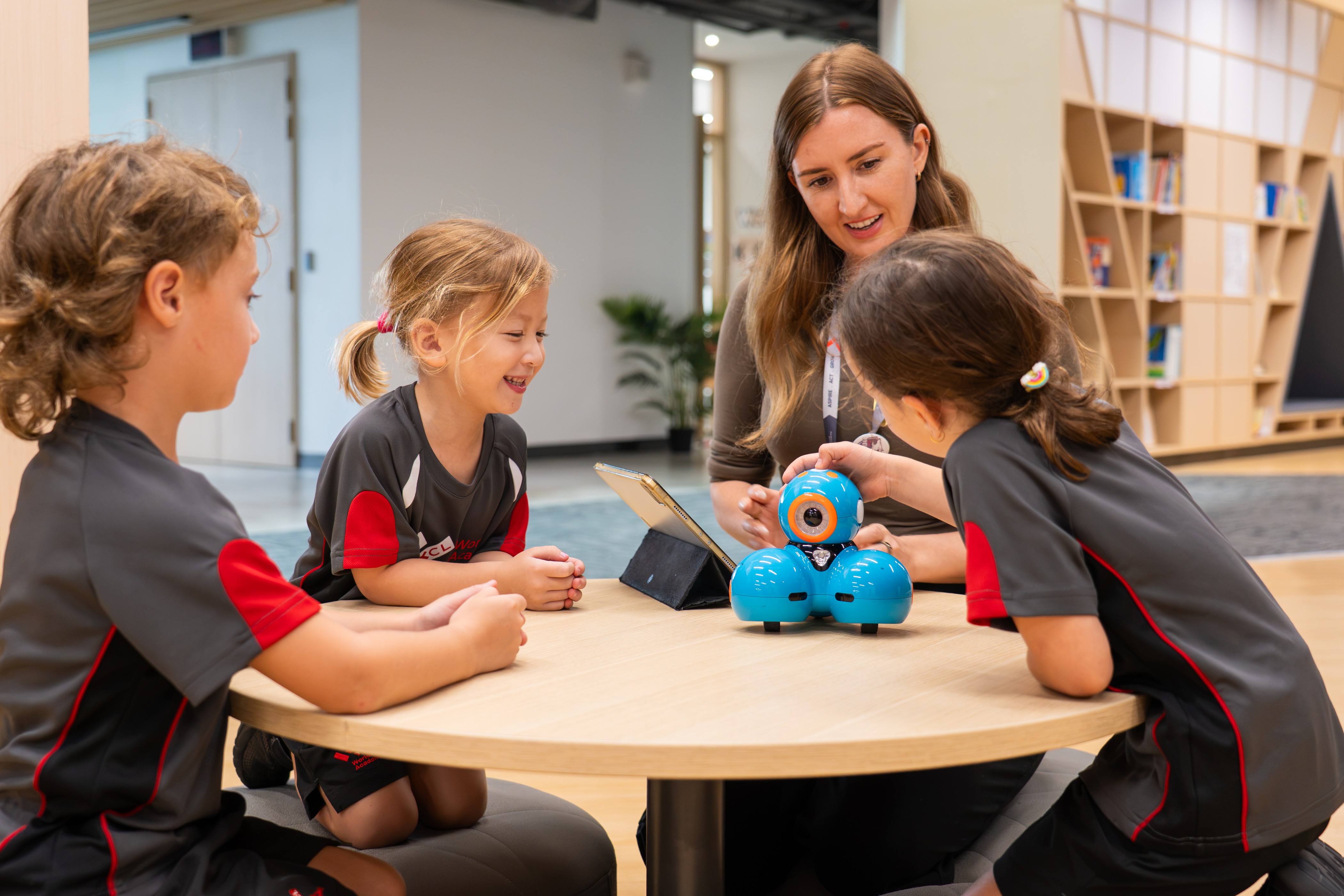
Will my child make friends? Will their teachers understand them? Will they be challenged academically and have the confidence to try something new?
Choosing an international school in Singapore means finding answers to questions that a prospectus alone cannot resolve.
For Heidi de Haas, Beth Sadler and Kat van Zutphen, choosing XCL World Academy (XWA) came down to a combination that can be difficult to find in one school: personalised teaching, internationally recognised academic pathways, opportunities shaped around each child’s interests and a diverse community where families feel known. Their experiences span moving countries, starting school, transferring from Singapore’s local school system and preparing for university.
At the recently held XWA Expat Family Social, the three parents shared what influenced their decisions, what surprised them after joining and what they would encourage other families to look for.

Can one school be the right fit for two very different children?
For Heidi, finding a school meant considering two children with different strengths and ways of learning.
Having lived in several countries and experienced different education systems, her family understood how much a school move could involve. Luc, her older son, currently in Grade 11, preferred practical, hands-on learning, while Rik, her younger son, currently in Grade 7, was more academically focused. Initially, she found herself prioritising Luc's next stage of education as he was entering high school, before recognising that both needed equal consideration.
At XWA, Heidi saw how a broad range of learning experiences and academic pathways could create a different, personalised journey for each child within the same school. Sports, academic challenges and a strong sense of community all mattered, giving both her children room to pursue their strengths and interests.
School size was another consideration. Coming from a small school in the United States, Heidi wondered how her children would feel on a larger campus. XWA offered the best of both worlds: the facilities and opportunities of a larger school, together with a personal, family-oriented atmosphere where her children could still feel known.
Within a few weeks, her children were coming home happy, talking about their teachers, projects and new friends. Those everyday conversations helped confirm that the family had made the right decision.
For parents choosing a school for siblings, Heidi’s experience raises a useful question: Can school help each child follow their own interests, rather than expecting both to follow the same path?
How do children settle into a new school and country?
For Beth, moving from the United States to Singapore brought questions about both belonging and continuity.
She initially looked for a school experience that felt familiar. Her son, Lucas, currently in grade 2, had already started school in the US, and she wondered how moving between education systems might affect him, particularly if the family returned home later.
During her husband’s school visits, however, XWA’s inquiry-led approach to learning stood out. He observed children exploring meaningful questions, thinking independently and working with teachers to find answers rather than simply being given them. That experience encouraged the family to reconsider what they wanted from a school.
Once they joined, the relationships made the difference.

Beth recalled meeting the Head of School, Ms. Maria Sweeney, during an early campus visit and being remembered when her son started school. As the family settled in, teachers beyond his own classroom also recognised him and asked about him.
That familiarity reassured Beth that her child was part of a community where people took an interest in him.
Classmates helped too. She described how welcoming the children were to her son as a newcomer to both the school and Singapore. Watching Lucas’ experience helped her daughter, Kirra, currently in Kindergarten, feel excited about starting school herself.
What does personalised academic support look like?
At the event, one prospective parent asked a question many families share: alongside the activities and opportunities, how are children supported to do well academically?
Heidi’s answer offered a practical example.
Rik, her younger son, loves mathematics, and Heidi initially approached his teacher expecting that greater challenge would mean more homework. Instead, the teacher proposed an approach tailored to his strengths: deepening his understanding by explaining mathematical ideas to classmates and learning how to communicate them clearly.
Alongside opportunities to participate in math competitions, he began discovering the satisfaction of helping others understand a subject he enjoyed.
For Heidi, this broadened her understanding of academic development. Her son could pursue his strength in mathematics while also practising communication, mentoring, and leadership.
According to Beth, her daughter Kirra’s teachers took time to understand what she already knew, what interested her and where she needed support. Beth began noticing changes at home, including an interest in drawing and the ability to write her name.
She also valued responsive communication. When she raised a concern about her son, his teacher followed up that day with an account of the steps taken.
Across these experiences, personalised learning became something tangible: teachers understood each child’s starting point, tailored challenge and support to individual needs, and kept parents closely involved. Academic growth was not treated as one-size-fits-all, but as a partnership shaped around the learner.
When is it time to move from a local school to an international school?
Kat’s children were born in Singapore and began their education in the local school system. Their moves to XWA happened at different stages and for different reasons.
Her daughter, Kate, had thrived academically. She joined XWA with university guidance a major consideration as she prepared to study overseas.
Her son, Max, needed a different classroom experience. He joined in Grade 6, and Kat found that XWA’s more personal, active and engaging approach suited him.
The experience changed how she thought about treating her children equally. Giving them the support they needed meant recognising that their needs were different.
Kat’s story is particularly relevant to families who are settled in Singapore but wondering whether their child’s current school remains the right fit. The question is personal: what environment will help this child learn, participate and grow at this stage?
How can school help a child discover their confidence?
For Kat, some of the most meaningful changes in Max came through opportunities he had not expected to enjoy.
He joined a band and began performing on electric guitar. Although he describes himself as an introvert, getting on stage revealed confidence his family loved seeing.

Then came another surprise: he told his parents he had auditioned for a school play.
Kat connected these moments to the range of opportunities available and the encouragement that comes from seeing friends get involved. Trying something new became more approachable when other students were doing it too.
Heidi had seen a similar willingness in her children to explore activities, from sport and photography to student council.
These experiences give parents a different way to assess school life. At XWA, opportunities beyond the classroom become part of each child’s wider development, building confidence, agency and a willingness to take positive risks. An opportunity becomes meaningful when a child feels supported to take it, whether that means stepping onto a stage, entering a competition or putting themselves forward for a role.
Kat also valued Max’s growing ability to advocate for himself. He felt comfortable emailing teachers or school leaders to express a view, and their willingness to listen showed him that student voice was valued. For Kat, that openness helped him develop the confidence to communicate respectfully and take ownership of his experience.
For her, learning to communicate with confidence was an important part of preparing for life beyond school.
How does XWA help students prepare for university?
For families considering the later school years, Kat’s experience with Kate offers a view of the university application process.
Kate began working with XWA’s university guidance counsellors when she joined in Grade 11. Kat valued the way they helped her daughter take ownership of her choices while keeping the family involved.
Having one of the lowest student to counsellor ratio allowed the counsellors at XWA to provide personalised, internationally informed guidance, helping Kate explore her interests and build a balanced university list that included ambitious options and other strong-fit choices. Individual appointments gave her clear next steps, kept the process on track and helped her take ownership of each decision.
Kat also appreciated their knowledge of different university systems. Kate was interested in studying in the United States, while Max has expressed an interest in Japan, bringing different questions to the family’s planning.
After completing the IB Diploma Programme, Kate gained admission to her first-choice university.
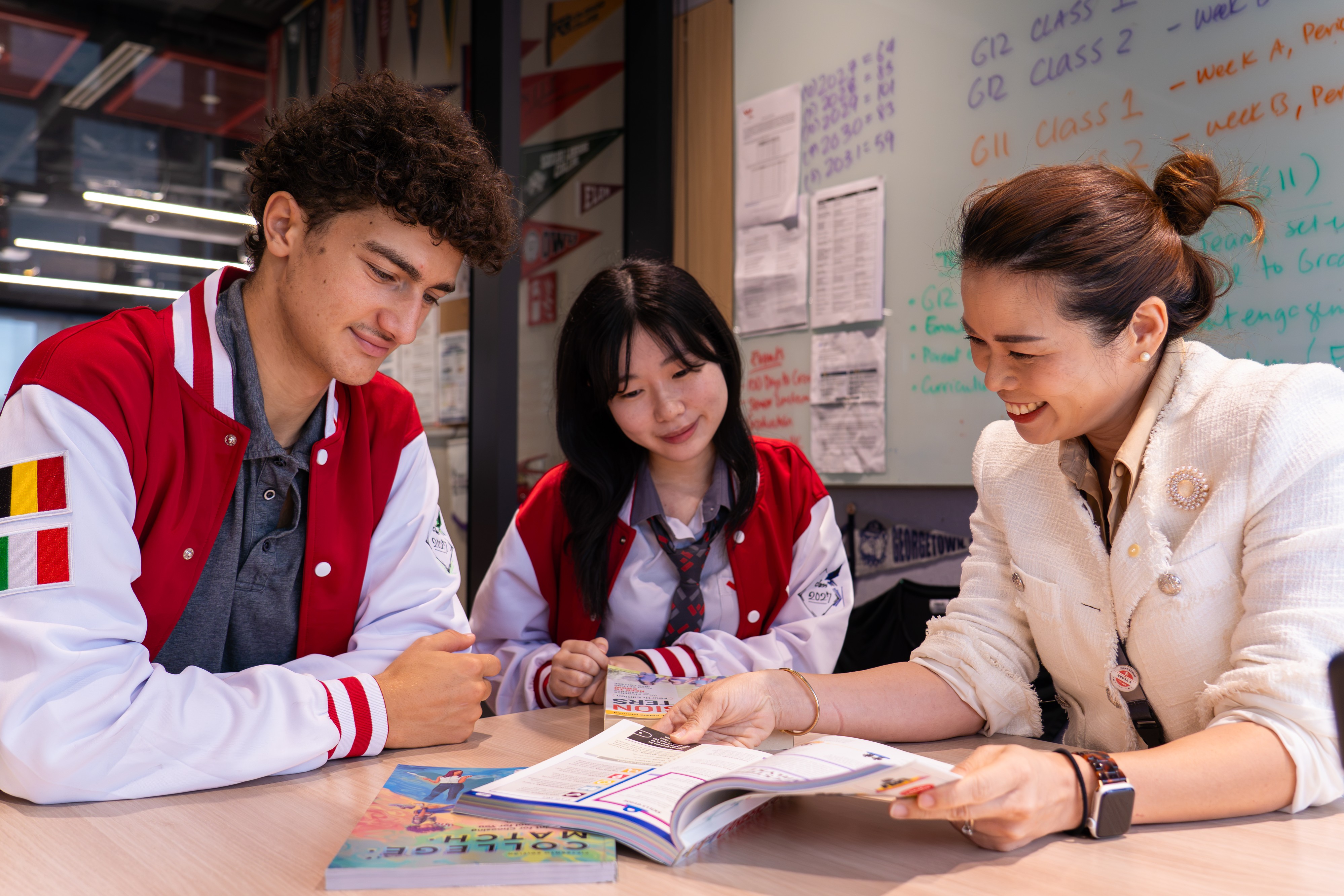
For prospective parents, the experience illustrates the value of guidance that connects a student’s interests and ambitions with practical support throughout the application journey.
Explore XWA’s University and Careers Guidance Programme.
Will parents find a community too?
A school move affects the whole family, and all three parents spoke about the importance of relationships.
Kat appreciated that XWA’s relationship with her family did not end after admissions. The familiar faces who had guided them through the decision remained part of everyday school life, creating continuity and making it easier to stay connected through ongoing conversations.
Heidi highlighted opportunities for parents to meet through cultural activities, workshops and school events. For families new to Singapore, these offered a way to make friends and become involved at their own pace.

Beth’s experience centred on the teachers and staff caring for her children each day. Their warmth, familiarity and genuine interest helped her feel reassured as a parent and gave her family an immediate sense of belonging in a new country.
Together, their accounts describe a school community that becomes part of family life, as well as a place children attend.
What should you look for when visiting an international school?
When asked what advice they would give other parents, the three parents returned to the relationships and experiences within the school.
Kat, an engineer by training, had been particularly impressed by the design and maker spaces. She later realised that her children’s strongest interests lay elsewhere. What mattered was how they connected with people and discovered opportunities that suited them.
Their experiences suggest five questions to bring to your next school visit:
- How will teachers get to know my child’s strengths, interests and needs?
- What does academic challenge look like for different learners?
- How are new students helped to build friendships?
- What encourages children to try activities outside their comfort zone?
- How will the school work with our family as our child grows?
For Heidi, Beth and Kat, the answers became clearer through daily life at XWA: teachers who understood each child, learning tailored to individual strengths, opportunities that built confidence, an internationally minded pathway to university and a community that welcomed the whole family.
Wondering what that could look like for your child?
Book a personalised tour of XCL World Academy to meet the team, explore the learning environment and discuss what matters most to your family.