

Every parent dreams of their child to excel academically while also having a fulfilling and joyful childhood. But what if there was one educational approach that could combine both fun and learning?
Introducing play-based learning – an interactive method that transforms your children from passive to active learners. This learning approach sparks natural curiosity and passion for exploration, ensuring learning becomes a journey of excitement and discovery. In the world of play-based learning, children embrace a positive attitude towards education, empowering them to thrive in school and life beyond the four walls of their classroom.
In this article, we will dive deep into the world of play-based learning and explore how it can benefit your children. Get ready to explore how it works in the classroom while also discovering effective ways to incorporate it within the comfort of your own home.
Understanding the Play-based Approach to Learning and Its Benefits to Children
Unlike traditional teaching methods that follow a rigid curriculum, play-based learning recognises that children learn best when they actively interact with their environment and engage in hands-on experiences. It places emphasis on child-centred activities that revolve around play and foster a sense of active involvement. Through a wide range of interactive and enjoyable activities, play-based learning enables children to explore, experiment and uncover knowledge in a way that sparks genuine engagement and pure enjoyment.
Extensive research shows that play-based learning offers numerous benefits for children’s development and education. Here are some of the key advantages:
- Cognitive development: Play-based learning stimulates various cognitive skills, such as problem-solving, critical thinking, creativity and decision-making. Through imaginative play, children engage in complex scenarios, make choices and explore different solutions, fostering cognitive growth and adaptability.
- Social and emotional development: Play provides opportunities for children to interact with others, negotiate roles, share, cooperate and develop empathy. It helps them understand emotions, manage conflicts and build communication skills. Play-based learning promotes self-awareness, emotional regulation and the ability to build positive relationships.
- Language and literacy skills: Play-based activities incorporate language use and storytelling, fostering language development, vocabulary expansion and improved literacy skills. Children engage in conversations, engage in imaginative play narratives, and practice reading and writing skills through play.
- Physical development: Play-based learning often involves physical activities, such as running, jumping, climbing and balancing, which enhance children’s gross motor skills, coordination and body control. Fine motor skills can also be developed through play with puzzles, blocks, drawing and other manipulative toys.

- Creativity and imagination: Play-based learning encourages imaginative thinking, allowing children to create and explore fictional scenarios, experiment with different ideas and express themselves freely. This nurtures their creativity, originality and divergent thinking abilities, vital for problem-solving and innovation.
- Motivation and engagement: Play is enjoyable and makes learning fun and motivating for children. It enhances their natural curiosity, enthusiasm and eagerness to explore, promoting better attention, focus and active engagement in the learning process.
- Cultural and social understanding: Through role-playing and make-believe scenarios, children gain insights into different professions, traditions and social dynamics, fostering tolerance, respect and appreciation for diversity.
- Resilience and adaptability: Through facing challenges and discovering solutions, children cultivate resilience, perseverance and adaptability. They learn to overcome obstacles, handle setbacks and adjust their strategies, promoting strength and a growth mindset.
- Brain development: Research suggests that play-based learning activates multiple brain regions, including memory, attention and problem-solving. This stimulation supports the formation of neural connections and enhances overall brain development.
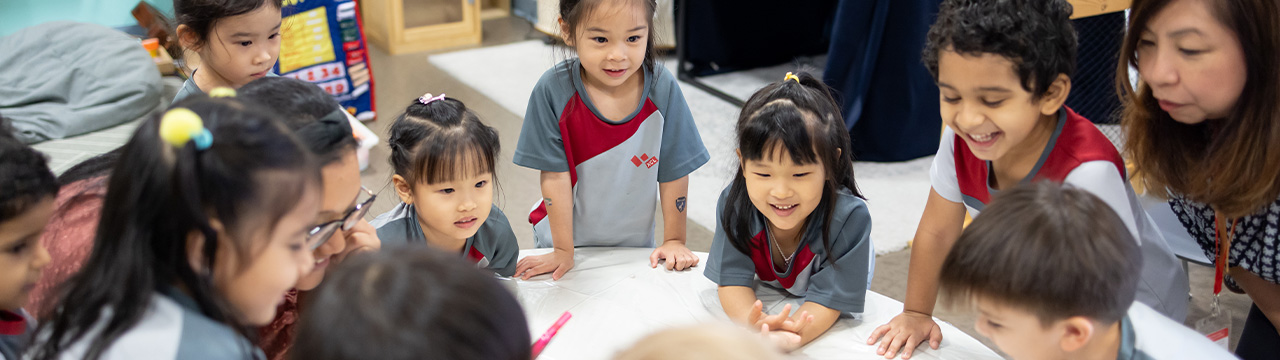
- Long-term educational benefits: Play-based learning sets a solid foundation for later academic success. The skills and attitudes developed through play, such as curiosity, creativity, critical thinking and collaboration, are transferable to formal educational settings and contribute to better learning outcomes.
In a nutshell, play-based learning presents a comprehensive strategy for nurturing children’s development, encompassing cognitive, social, emotional, physical and creative skills. Through play, educators and parents can create meaningful learning experiences for children.
Play-Based Learning in the Classroom: What does it mean?
Now that we’ve unveiled the wonders of play-based learning, it’s time to explore how it comes to life in the classroom. Applying the play-based approach means creating a supportive environment where children can engage in purposeful play that aligns with educational goals. Teachers play a crucial role in integrating play experiences with intentional teaching strategies to scaffold children’s learning. They design play-based learning activities that target specific learning outcomes, such as language development, cognitive growth and social skills.
In a play-based classroom, the teacher takes on the role of a facilitator. They carefully observe children’s play, identifying their strengths, interests and areas where they might need additional support. Teachers provide guidance to enhance their student’s learning experiences, encouraging a deeper exploration of concepts. They ask open-ended questions, present challenges and introduce new ideas, enriching children’s engagement and understanding within the play-based environment.
Exploring Examples of Play-Based Learning Activities
Play-based learning encompasses a wide range of activities that promote exploration, imagination and skill development. Here are some examples of play-based learning:
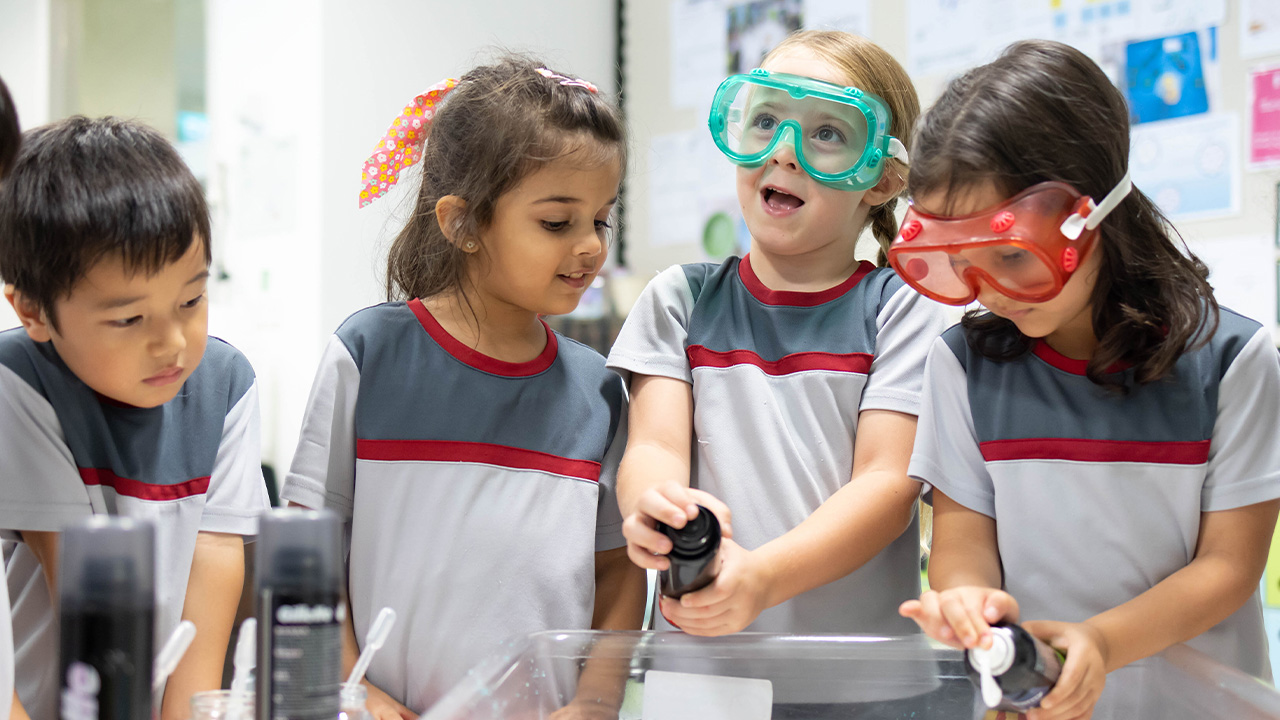
- Science experiments: Conducting simple science experiments, such as mixing colours, observing plant growth, or exploring magnets, introduces children to scientific concepts while fostering curiosity and critical thinking.
- Math manipulatives: Using blocks, counters, or measuring tools helps children grasp mathematical concepts such as counting, sorting, patterns and spatial relationships.
- Sensory play: Sensory play, such as sand and water play and finger painting, engages children in activities that stimulate their senses. It allows children to explore the world around them, enhance their fine motor skills, and develop language and vocabulary.
- Games and puzzles: Board games, memory games and jigsaw puzzles open opportunities for children to have fun while learning. Not only do they promote cognitive skills, but they also encourage strategic thinking, problem-solving and decision-making.
- Outdoor play: It encourages physical activity and nature exploration and promotes gross motor skills development. It allows children to engage in imaginative play, develop coordination and learn about the natural world.
- Construction play: Building with blocks, Lego, or other materials enhances spatial awareness, problem-solving and fine motor skills. As children experiment with building structures, they learn about balance, stability and geometry concepts.
How can you encourage play-based learning at home?
Play-based learning should not be confined to the classroom but fostered and encouraged at home. Creating a play-friendly environment and incorporating fun activities into daily routines can support your child’s overall learning and skill development.
Let’s explore some strategies on how you can encourage play-based learning at home:
Create a play-friendly environment
Design a dedicated play space where your children can easily move around and engage in different types of play. It can be a corner of the living room, a playroom, or an outdoor space like a backyard or balcony. Ensure the play spaces are safe, comfortable and organised with easy access to play materials.
Invest in a wide variety of play materials
It is beneficial to invest in a diverse range of play materials that cater to different interests. It can be anything from building blocks and puzzles to drama play props and art supplies. Open-ended play materials like blocks, clay and artificial sand are also a great option as they allow children to take control of their play activities, effectively building their creative skills.
Integrate play into daily routines
Integrating play into your child’s daily routine can also be an exciting way to encourage play-based learning at home. For example, during mealtime, you can play an alphabet food hunt where your child finds food items starting with each letter of the alphabet. During bath time, encourage your child to play with water-safe toys to foster sensory play. Bedtime can be transformed into a storytelling adventure, where you could leave the story with an open-ended scenario and ask your child to come up with their version of how it could end.
Foster outdoor exploration
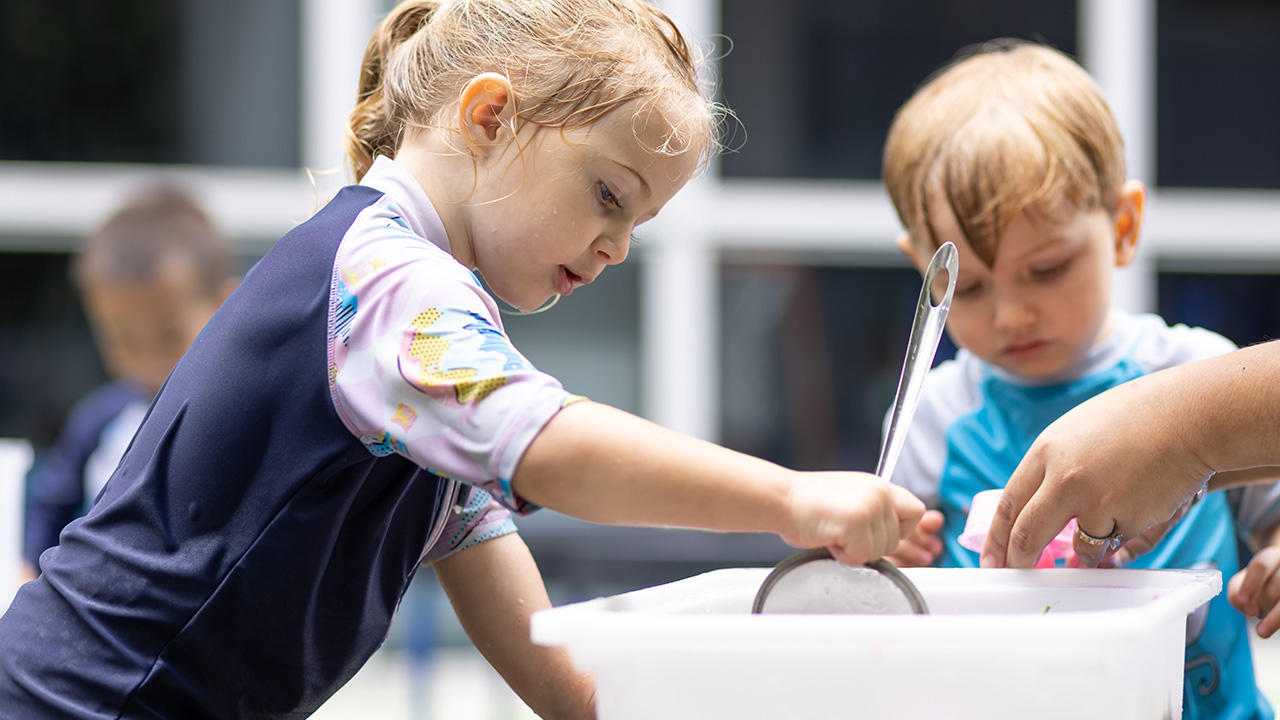
You can also take advantage of outdoor spaces to help your child to engage in play-based learning. Visit local parks, nature reserves and playgrounds, where they can explore nature independently and learn more about the environment. They would be able to observe plants and animals and more natural phenomena, sparking a love for curiosity.
Embrace messy play
Messy play, such as finger painting, playing with clay, or exploring sensory bins, can hone your children’s senses and stimulate their learning. These activities will allow your children to explore different textures, experiment with cause and effect, and fine-tune their motor skills.
Pro tip: Embrace the messiness to make these learning activities memorable and joyful for both of you.
Unlocking the Transformative Power of Play-Based Learning at XWA
Play-based learning at XCL World Academy (XWA) offers a holistic and enriching educational experience for our students. We take pride in our educational philosophy, which revolves around creating an environment where our students can learn, grow and thrive through purposeful play. By integrating play into our curriculum, we aim to unlock their full potential, foster a love for learning and equip them with essential skills for the future.
At XWA, play-based learning goes beyond mere playtime. All activities for our Nursery and Early Years students have been thoughtfully designed to harness the power of play while supporting their holistic development.
Our teachers lead students through purposeful play experiences that align with their interests and developmental needs. We encourage our students to express themselves creatively and develop their imaginative thinking through art, music, storytelling and dress-up activities. We also help them build strong social connections and develop emotional intelligence by engaging them in group activities, role-play and performances on stage during assemblies.
Cognitive development is also an integral part of play-based learning at XWA. Our students engage in a wide range of activities that promote critical thinking, problem-solving and logical reasoning. Whether it’s through solving puzzles or building blocks, everyone is encouraged to explore, analyse and find solutions independently.

Apart from these fun-filled play-based learning activities, XWA also offers state-of-the-art facilities that provide inspiring learning spaces for our students. Our spacious classrooms are designed to provide a comfortable and conducive learning environment where students can play, learn and collaborate with their classmates. Moreover, we have well-equipped visual art and music rooms where our students can participate in artistic activities that will help them develop their creativity and self-expression.
Join us at XWA and watch your children thrive in a dynamic and engaging academic setting, surrounded by a community of passionate educators and young learners eager to embrace the joy of learning through play. Learn more by getting in touch with our Admissions Team today. You can also book a campus tour to witness our world-class facilities!
.jpg)