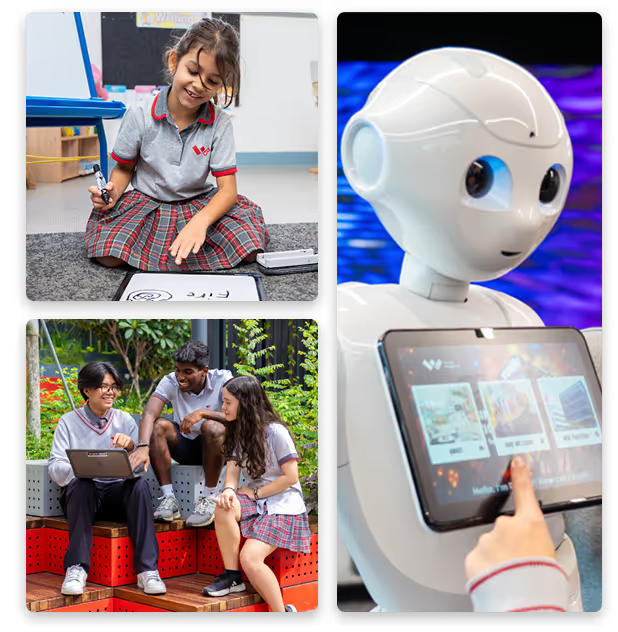


As parents, we all want our children to grow into happy, healthy and caring adults. We want to see them thrive, make good decisions and achieve their long-term goals. That’s where important social and emotional skills come in — skills like empathy, communication and self-management. These life-long skills help children overcome day-to-day challenges and to connect with people around them.
While kids first acquire these skills at home, some schools actively teach them as part of the curriculum. This means that aside from mathematics, sciences, physical education, languages and the arts, students also learn how to set goals, empathise with others and make informed decisions. This process is called social-emotional learning, and it comes with a multitude of benefits for children.
Read on to know more. You can also click on the shortcuts below to access each section of this guide.
- What is Social-Emotional Learning?
- Types of Social-Emotional Learning skills
- How Social-Emotional Learning benefits kids
- Sample activities for Social-Emotional development
What is Social-Emotional Learning?
To put it simply, social-emotional learning is the process of developing and applying social and emotional skills. It aims to develop students into caring individuals who can:
- Cultivate healthy identities
- Set and achieve goals
- Understand and manage their emotions
- Show empathy and care for others
- Form and maintain supportive relationships
- Make responsible decisions
Social-emotional learning, or SEL, begins from a very young age and continues through adulthood. In the classroom setting, SEL is not taught as a single subject. Rather, it’s integrated into lessons throughout the day.
For example, during an art class, your child may be assigned to paint a picture with a classmate. This activity encourages turn-taking and sharing with others. Some activities may appear simple, but these intangible skills will help your child overcome future challenges and allow them to thrive in school and long after.
Just like physical skills need to be practised, social-emotional skills also need to be developed into lifelong habits. Parents, schools and communities can all help students learn and practice these skills through various activities.
Types of Social-Emotional Learning skills
The Collaborative for Academic, Social and Emotional Learning (CASEL) lists five fundamental competencies that make up SEL:
- Self-awareness
- Self-management
- Responsible decision-making
- Relationship skills
- Social awareness
Each competency spans a wide range of skills:
Self-Awareness
Self-awareness involves understanding one’s own emotions, abilities, values and goals. Children with a strong sense of self-awareness are better able to express their needs and assess their capabilities.
Self-awareness skills include:
- Identifying one’s emotions
- Recognising strengths and weaknesses
- Expressing one’s needs
- Being honest
- Having a growth mindset
Self-Management
Self-management involves the ability to control one’s emotions, thoughts and actions in different situations. Children with self-management skills are more likely to take the initiative and set their own goals.
Self-management skills include:
- Setting goals
- Managing emotions
- Planning and organizing
- Taking initiative
- Motivating oneself
Responsible Decision-Making
Responsible decision-making involves the ability to make caring decisions and understand the consequences of one’s actions. Children with this skill tend to be more curious and empathetic.
Responsible decision-making includes:
- Demonstrating curiosity and inquiry
- Using critical thinking skills
- Identifying solutions to problems
- Weighing risks before making a decision
- Understanding the consequences of one’s behaviour
Relationship Skills
Relationship skills help children form and maintain supportive relationships and effectively navigate in diverse social settings.
This competency spans a wide range of skills, such as:
- Communicating effectively
- Demonstrating leadership
- Forming positive relationships
- Practising teamwork and collaboration
- Offering and asking for help when needed
Social Awareness
Social awareness is the ability to empathise and understand the perspectives of others, including people from different cultures and backgrounds. Children with strong social awareness are more compassionate, understanding and supportive of their peers.
Social awareness skills include:
- Understanding others’ perspectives
- Recognising others’ strengths
- Showing compassion
- Considering the feelings of others
- Saying thanks
These five competencies are strongly interrelated and can be taught and applied at various developmental stages. To help students hone their social and emotional skills, schools use a combination of active instruction and age-appropriate activities.
Research shows that this approach has a positive impact, and not just on students’ academic performance. Let’s dive into the benefits of SEL for your child.
How social-emotional learning benefits kids
At its core, SEL equips children with the skills they need to navigate school and life successfully. And you don’t have to wait long to see its benefits. Research shows that SEL can lead to:
- Better academic performance — Children with SEL competencies are more engaged during lessons and adept at self-motivation, which leads to higher grades and test scores.
- Increased participation and attendance —SEL helps children build confidence and communication skills, leading to active class participation. It also has a positive impact on daily attendance.
- Fewer behavioural issues — Teaching and modelling appropriate behaviour is a key aspect of SEL. This leads to fewer disciplinary incidents and encourages positive attitudes among students.
- Improved mental health and self-esteem —SEL helps students form supportive relationships with peers and adults, which leads to improved mental health and a boost in self-esteem.
- Positive relationships with teachers and peers — By practising communication and collaboration, students can establish healthy relationships with their schoolmates, teachers and other mentors.
Additionally, SEL benefits families and wider communities — making it a critical part of early childhood development.
Sample activities for social-emotional development
Social and emotional skills can be taught in many ways and to students of all levels. Students benefit most from starting SEL in early childhood, but it’s also important to ensure that it continues throughout their schooling.
In the Early and Primary Years, we use various curriculum resources to support social and emotional learning, such as the following:
- IB Learner Profile
- 學習方法 (ATLs)
- PYP 個人、社會與體育教育 (PSPE) 課程範圍與順序文件
- 來自多個來源(包括 ACARA 標準)的具體課程標準,以支持課程範圍與順序文件。
此外,我們提供全面的班級導師與輔導關懷課程,以促進學生的學術、社交和情感發展,讓每位學生都能充分發揮潛力。透過班級導師與輔導關懷課程,我們的學生習得並有效運用理解和管理情緒、達成積極目標、展現同理心以及做出負責任決策所需的知識、態度和技能。此外,我們還有年級組長、輔導組長和學校輔導員,他們隨時可與學生會面。
我們將社交與情感學習融入探究單元和各種課堂活動中。偶爾,我們也會開發獨立課程,以涵蓋不適合探究單元的核心內容。以下是您的孩子在 XCL World Academy 學習社交情感技能的一些範例:
在 幼兒園中,我們請年幼的學習者製作有悲傷和快樂表情的布偶。在故事時間,我們請他們分享自己認為角色有什麼感受,並舉起帶有該表情的布偶。學生也可以使用這些布偶來表達自己的情緒。
在 幼稚園中,我們可能會請學生兩人一組畫畫,然後給每組一杯美術材料使用。這有助於他們學習分享、輪流和傾聽彼此。
透過「共享地球」探究單元, 小學階段 的學生學習透過相互尊重和理解來建立和平關係。輔導員與班級導師共同授課,引導學生學習衝突解決策略。
我們讓 中學階段 的學生辯論他們熱衷的事物,以教導他們如何組織論點、傾聽反對意見並尊重地表達自己的立場。這也是建立自信和公開演講技能的好方法。
在 高中階段中,我們請學生找出自己的個人優勢,並撰寫一篇反思,說明每項優勢如何在日常生活中幫助他們。我們也請他們寫下希望改進的弱點。這項活動讓學生培養自我意識和自我管理技能,有助於他們為大學及未來做好準備。
社交情緒學習 (SEL) 幫助孩子培養在學校和生活中取得成功所需的技能。作為家長,您可以透過花時間陪伴孩子、積極傾聽並練習同理心和耐心來支持他們的社交情緒發展。與孩子的老師合作也同樣重要。
社交情緒學習 (SEL) 也帶來廣泛的益處,包括提升學業表現和改善孩子的心理健康。在家中實踐社交情緒學習,您可以強化這些正向成果,並幫助孩子成長為富有愛心、有能力的人。
若想進一步了解我們如何支持學生的社交情緒學習, 請聯絡我們 或立即預約 個人化校園導覽。