
S$50,000 per year. That's the number that stops most parents mid-search when looking at international schools. But that number tells you almost nothing about what you're actually paying or getting.
This guide breaks down the real cost of international education in Singapore, from tuition tiers to hidden expenses most families miss. More importantly, it shows you how to assess what you're getting for your money and which factors actually matter for your child's future.
Understanding the fee landscape
International school fees in Singapore typically range from S$15,000 to over S$50,000 annually, with the average sitting around S$32,500. These broad ranges mask important differences in what you actually receive.
Premium tier: S$45,000 to S$55,000+ annually
Top institutions charge some of the highest fees, offering extensive facilities, broad extracurricular programmes, and globally recognised curricula. In early years, many premium schools staff classrooms with two or three adults (teacher plus teaching assistants), creating adult-to-student ratios around 1:8. Class sizes in primary and secondary are typically 18–25 students, comparable across tiers. Expect professional theatre spaces, multiple specialist science labs, extensive sports complexes with full-time coaching staff, and dedicated innovation or design technology centres.
Mid-tier: S$35,000 to S$45,000 annually
International schools in this range maintain rigorous academic standards, robust programmes, and often excellent facilities at a lower headline fee than the most established names. What varies widely within this band is what the fee actually covers. Two schools with the same tuition can send you very different invoices once ECAs, materials, and trips are billed.
Budget tier: Under S$35,000 annually
Schools in this range provide quality international education at more accessible price points. Class sizes may be larger, around 30 students, with teacher-to-student ratios closer to 1:15. Less expensive institutions generally have fewer amenities like multiple science labs or extensive performing arts centres.
How MOE schools compare
For context: MOE school fees vary dramatically by residency status. Citizens pay minimal fees, but foreign students face around S$2,500 per month for MOE secondary schools, and entry requires passing the competitive AEIS exam with no guaranteed placement. For foreign families, the gap between local and international options is narrower than headline figures suggest. International schools offer predictable admissions, international qualifications, and English-medium instruction.
The true cost beyond tuition
Tuition represents just the starting point. Here's what actually lands on your invoice.
One-time fees
Application fees range from S$250 to S$4,000 and are typically non-refundable. Registration or enrollment fees secure your child's place, varying widely by school. Capital or building levies can range from S$2,000 to S$8,500, contributing to facility maintenance and development.
Annual recurring costs
Development or technology fees typically run S$400 to S$1,000 annually. Transportation through school bus services costs between S$2,000 and S$12,000 annually. Daily canteen meals can cost anywhere from S$900 to S$1,800 per year.
Uniform requirements
With blazers that can cost upwards of S$100, a complete uniform set including formal uniform, PE kit, house shirt, and school-branded swim gear can cost close to S$300. You'll need multiple sets unless you can wash and dry daily.
Optional but often necessary expenses
English as an Additional Language support: Around S$6,500 – S$9,000 annually. Learning support services: Around S$4,000 – S$6,000 annually. Specialist programmes or intensive courses add further costs.
What to include in your budget
Beyond tuition, factor in these standard costs: books and materials, school trips (which increase in secondary years when overseas excursions become common), extracurricular programme fees, technology requirements, examination fees for IB or other qualifications, and insurance. Most schools publish these in their fee schedules. Ask for the complete breakdown before comparing.
Total first-year reality
Consider a Kindergarten 1 student at a mid-tier school:
- S$36,000 tuition
- S$7,000 application and enrolment fees
- S$3,000 transport
- S$1,200 lunch programme
- S$300 uniforms
First-year total: S$47,500
Subsequent years drop to around S$38,500 without one-time fees. This pattern repeats: your first year always costs more.
These hidden costs vary significantly by school. Some bundle more into base tuition, while others charge separately for almost everything, including activities many families end up sourcing externally, such as swimming lessons, sports coaching, or enrichment classes not offered in school.
The true cost of education is not just fees. It also includes time, logistics, and additional spending outside the classroom. The only way to understand this is by examining the complete fee structure. Here is what that looks like in practice.
XWA fee structure
XCL World Academy offers complete transparency on costs. Here's exactly what families pay for 2026-27. All figures are inclusive of 9% GST.
Early Years
- Nursery: S$27,580
- Pre-K: S$29,300
- K1: S$32,770
- K2: S$37,300
Primary (Grades 1 to 5)
- G1: S$40,360
- G2: S$42,150
- G3: S$42,800
- G4: S$43,180
- G5: S$43,180
Secondary (Grades 6 to 10)
- G6: S$45,750
- G7: S$47,770
- G8: S$48,290
- G9: S$49,570
- G10: S$49,570
IB Diploma (Grades 11 to 12)
- G11: S$49,810
- G12: S$49,810
Additional costs
- Development Fee: S$3000 annually
- EAL Support: S$8,070 annually (optional)
- Learning Support: S$4,380 annually (optional)
One time fees (contact admissions@xwa.edu.sg for current rates):
- Application: S$288
- Enrolment: S$6,355
Multi-child benefits
XWA offers sibling discounts that reduce costs significantly:
- 10% discount for 2nd and 3rd children
- 20% discount for 4th and subsequent children
- 100% enrolment fee discount (S$6,355) for newly enrolled siblings
What tuition includes
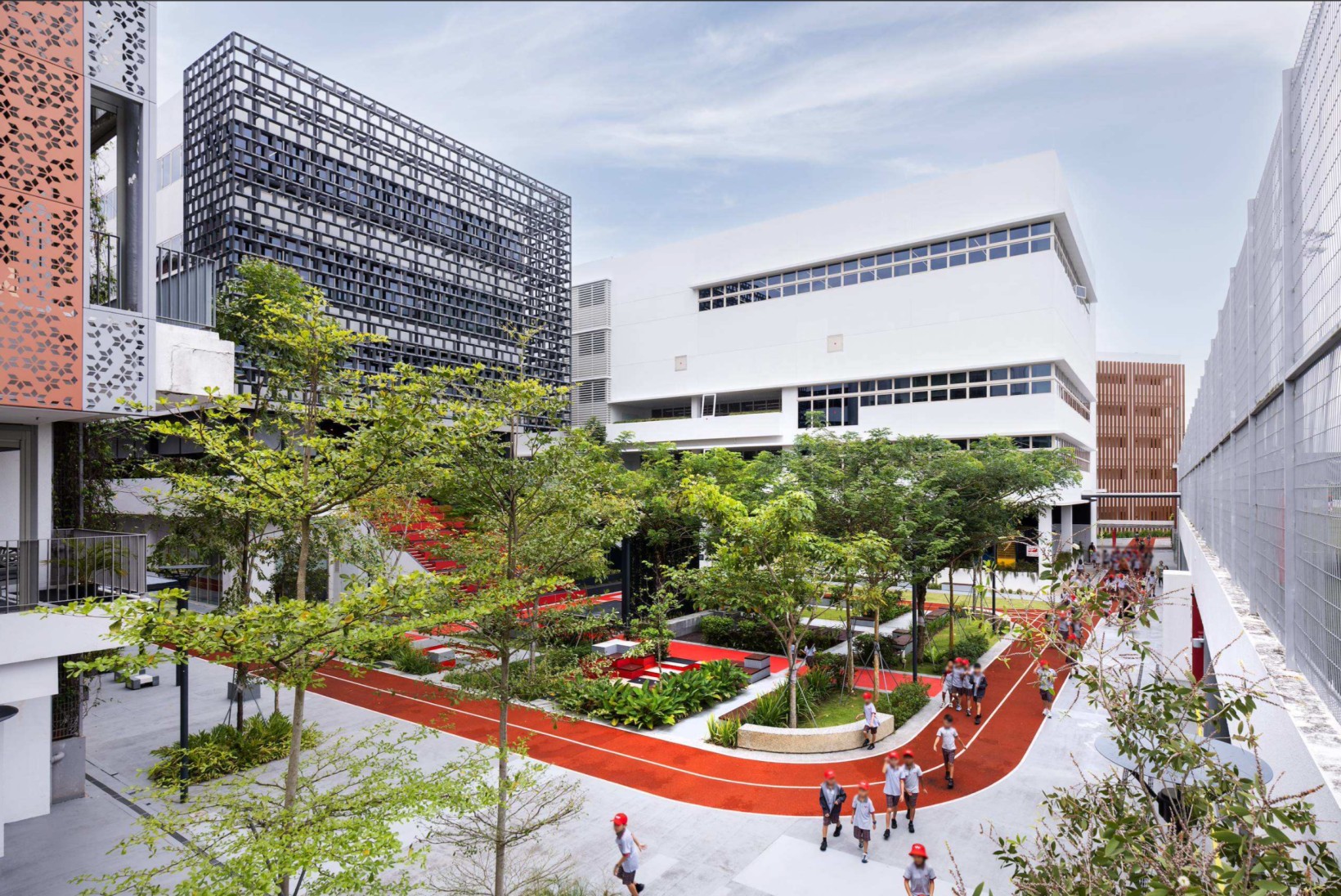
Tuition covers the full IB programme (PYP, MYP, DP), core curriculum materials, standard technology access, core extracurricular programmes, and full facilities access including the one of its kind Innovation lab, a 50-metre Olympic-sized swimming pool, a FIFA grade football field, professional theatre spaces and a lot more. This delivers a complete international education spanning early years through university preparation.

Long-term planning
A child progressing from Nursery through Grade 12 at XWA faces approximately S$680,000 to S$720,000 total, assuming 3% annual fee increases. For families with multiple children using sibling discounts, per-child costs decrease significantly.
This positions XWA clearly in the accessible-to-mid tier whilst delivering IB continuum, Bilingual Programme, AI-integrated learning, a community of 50+ nationalities, 50-metre Olympic pool, an innovation lab including maker spaces and design studios, and university counselling starting Grade 8.
What actually drives the price differences
Understanding fee variations matters because it shows you where your money actually goes. At S$45,000, a school typically offers both strong facilities and small classes. The sharper comparison is between a school at that level with ECAs, specialist programmes, and materials included in the fee, and a school with a lower headline fee that bills separately for them. By the time the extras are added up, the totals often land close together, and sometimes the on paper budget-friendly schools, end up costing more.
The drivers below explain why schools price where they do. More importantly, they show you which factors actually affect your child's learning versus which are nice-to-haves.
Curriculum costs
IB schools have higher costs due to teacher training requirements, extensive assessment protocols, and global infrastructure. Schools pay annual IB authorisation fees, send teachers for regular training, and maintain ongoing compliance. These costs get passed to families.
Teaching talent
Internationally recruited teachers command higher salaries, which is often reflected in tuition. Schools hiring qualified teachers from the UK, US, Canada, or Australia pay competitive international rates plus relocation packages. Teacher-to-student ratio matters significantly, as schools offering smaller class sizes require more teaching staff, increasing operational expenses.
Facilities investment
Campuses with pools, performance halls, advanced sports grounds, and integrated technology infrastructure tend to charge more. Building and maintaining specialist spaces requires substantial capital investment and ongoing operational costs.
Location economics
Big-city schools tend to be pricier due to real estate, demand, and staff costs. Singapore's land costs drive significant price variation between schools.
Comparing your choices
Local MOE schools
What you gain: Established curriculum, extremely affordable, strong academic foundation, integrated with Singapore's education system.
What you trade: Fewer international curriculum options, though a small number of MOE schools offer the IB Diploma and Singapore-Cambridge O and A Levels are internationally recognised. A mother tongue language requirement applies, with Malay a common choice for children not suited to Mandarin and further languages available through the MOE Language Centre at secondary level. Pedagogy is highly exam-focused, curriculum flexibility is lower, and the perspective is Singapore-centred by design.
Best fit when: Your family's long-term plan is to settle permanently in Singapore, your child is heading toward local university pathways, and you value the Singapore curriculum's structured approach. Lower fees come as a bonus of that choice, and are rarely the reason for it.
Mid-tier international schools
What you gain: Rigorous academic standards, robust programmes, international qualifications and curricula like the IB, IGCSE, or IPC, diverse student body, global university pathways.
What differentiates schools within this tier: Full continuum versus single programme offerings. Technology integration across curriculum. University counselling depth and timeline. Actual diversity, noting that some schools manage their mix through nationality caps, so ask for the current student nationality breakdown. Teacher qualifications, experience, and retention rates.
XWA sits firmly in this tier, offering the IB continuum from PYP through DP, a community of 50+ nationalities, future focussed facilities, early university counselling starting Grade 8, and strong co-curricular programmes across arts, sports, and technology.
Best fit when: You want international qualification plus value positioning. Your child needs global university options. You prioritise inquiry-based learning and critical thinking development. Budget matters but quality remains non-negotiable.
Premium tier schools
What you gain: Extensive facilities beyond standard requirements, lower adult-to-student ratios in early years (often 1:8 through additional teaching assistants), extensive extracurricular range with specialist coaches, established brand recognition.
What justifies the premium: Lower student-to-teacher ratios offering highly individualised instruction, a wide range of activities requiring additional resources and specialised staff. Premium schools often maintain multiple specialist teachers per subject area and offer extensive Advanced Placement or university-level course options.
The facilities at this tier extend beyond what most families consider necessary. Multiple science labs per discipline with university-grade equipment. Professional recording studios. Dedicated performing arts centres with resident directors. Full-time specialist coaches across every major sport. These create rich learning environments for children who will fully utilise them.
Best fit when: Your child will actively use extensive specialist facilities. Highly individualised instruction is essential for their learning needs. Brand recognition matters significantly in your context. The budget genuinely doesn't constrain your choices.
Making fees work financially
Payment structures
Most international schools offer termly or quarterly payment plans instead of requiring full annual payment upfront, and some, XWA among them, let families spread a full semester's fees across six monthly installments at 0% interest using an OCBC credit card payment plan. Confirm payment schedules before committing.
Employer sponsorship reality
Traditional expat packages that include school fees have become increasingly rare, described as "almost an urban myth these days" due to companies' constant focus on cost control.
However, some employers still offer education allowances. Negotiate these during job offers rather than attempting to add them later. Research which companies in your industry maintain education support. Bring specific cost data to negotiations.
If relocating for work, request detailed breakdown of living costs including education. Companies often provide more flexibility on allowances than fixed salary components.
Financial aid landscape
While most international schools don't run long-term scholarship programmes, many announce individual scholarships based on academic merit, diversity, athletic skills, or financial need.
K-12 international school financial aid remains limited compared to university scholarships. Contact schools directly about current scholarship availability. Some run annual merit scholarship programmes for Grade 6 and above. Competition for these awards is typically intense.
XWA offers targeted scholarship opportunities. Contact admissions@xwa.edu.sg for current availability and eligibility criteria.
Tax considerations
Singapore's Course Fees Relief allows up to S$5,500 annual tax relief, but this applies only to professional or vocational courses for adults. International school fees for children are not tax-deductible in Singapore. The tax runs the other way too: school fees paid by an employer count as a taxable benefit, treated as part of the employee's income and taxed accordingly, so weigh the net value when negotiating a package.
US expats should note that K-12 tuition cannot be deducted on US taxes either. American Opportunity and Lifetime Learning credits apply only to higher education expenses, not primary or secondary school fees.
Planning for fee increases
Factor in 3% to 5% annual fee increases when budgeting long-term. Schools typically announce fee changes 6 to 12 months in advance. Lock in current rates by securing placement early when possible.
Plan for the stay you actually expect. Most expat families are not in Singapore for a full school career, with the average stay running just under four years, so project costs across your realistic horizon first. If Singapore may become long-term, extend the projection to graduation, which reveals the full investment and shows whether fees stay manageable through the secondary years, when they peak.
The question of return
Unlike spending on assets like a car, with International school fees you can't compare specifications and resale values. You're funding years of daily experiences that shape how your child thinks, relates to others, and approaches problems. That makes ROI harder to quantify but no less real.
The return breaks into three categories: skills your child develops, qualifications they earn, and doors those qualifications open. Each matter differently depending on your child's trajectory.
Skills that compound
IB programmes help students think critically, synthesise knowledge, reflect on thought processes, and engage in interdisciplinary thinking. These fundamental approaches shape how children tackle problems throughout life, not just during school years. A child who learns to question assumptions, connect ideas across subjects, and articulate complex arguments carries those capabilities into every future challenge.
Global perspective matters increasingly. In a close-knit community of more than 50 nationalities, children meet different viewpoints, communication styles, and problem-solving approaches daily. This builds genuine cross-cultural competence through experience rather than theory. Your child learns to collaborate with people who see the world differently, a skill that matters in virtually every career path.
These skills carry real value. Your decision comes down to whether your child needs international education to build them, or whether alternative pathways would work equally well.
Qualification portability
The IB Diploma is accepted by more than 5,000 universities globally, including leading institutions in the UK, US, Europe, and Asia. Singapore-Cambridge A Levels carry wide international recognition too. Where the IB route adds value for internationally mobile families is continuity: the same curriculum across countries if the family relocates again, and a cohort and counselling team geared toward worldwide applications.
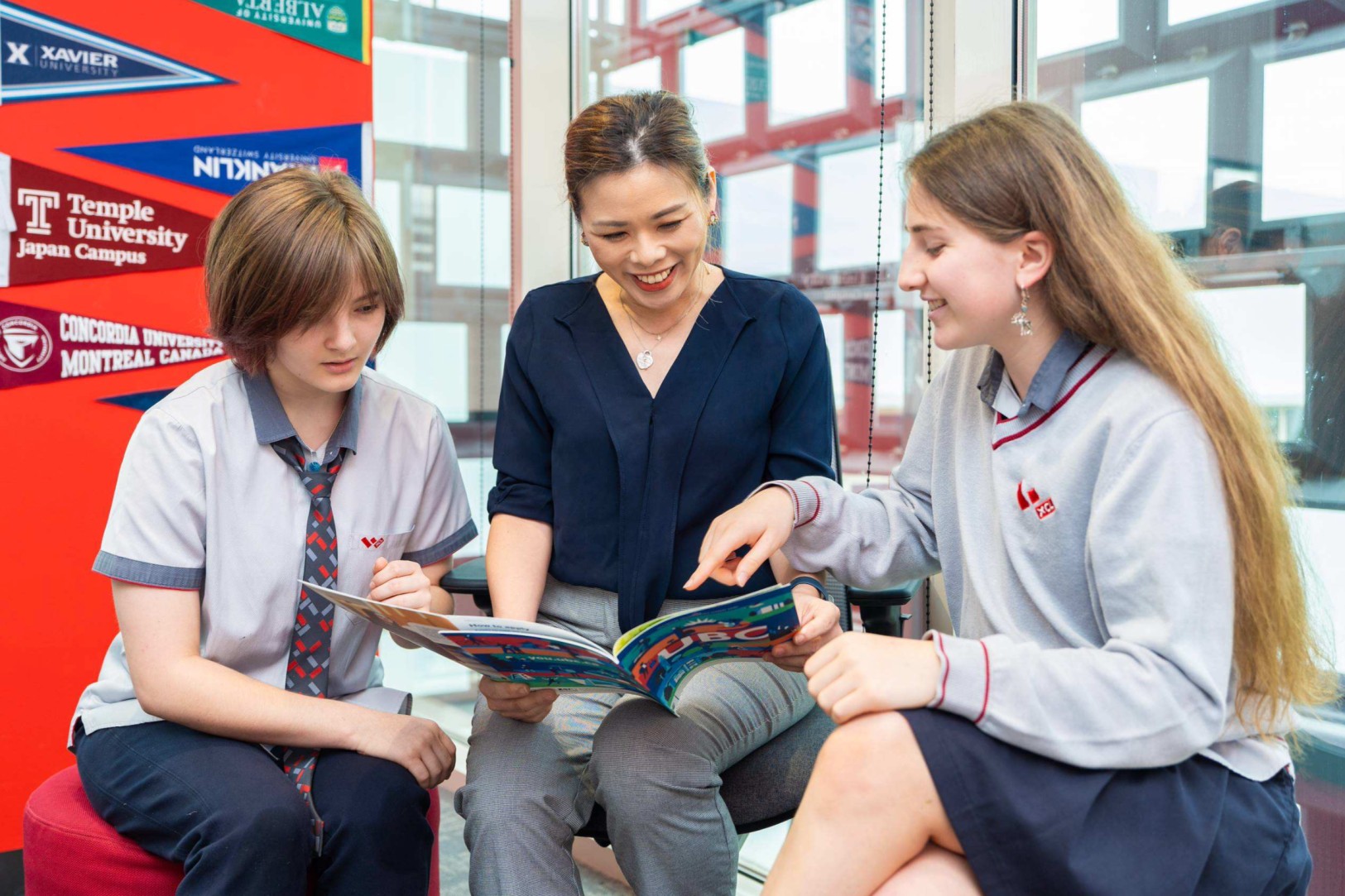
University counselling depth creates compound advantages. Schools with dedicated counsellors starting in Grade 8 or earlier provide strategic support throughout the university application process. Early guidance on subject selection, extracurricular development, and standardised testing builds systematic advantage.
XWA graduates have secured over USD 28 million in university scholarships over the past three years, with admissions to top universities including the Ivy League. The Class of 2026, a cohort of 52 students, received more than 635 university offers from leading global institutions, including NYU, UCL, the Rhode Island School of Design, and the University of Melbourne, among many others. Collectively, these offers include over USD 25 million in university scholarships, reflecting both the academic strength of the students and the quality of guidance they receive.
When accessible international makes sense
Your child will pursue university education outside Singapore. You value curriculum prioritising inquiry and critical thinking over memorisation. Your family may relocate again and needs portable qualifications. You want learning through projects and real-world application. The investment represents manageable percentage of household income (financial advisors typically suggest education costs below 20% to 25% of household income).
XWA's positioning delivers full international programme without requiring premium-tier budget. Complete IB continuum ensures smooth progression from early years through university preparation. Maker spaces, design studios, and technology integration prepare children for rapidly changing careers. Early university counselling provides strategic advantage in competitive admissions landscape.
When premium pricing makes sense
Specific facilities matter deeply to your child's development. Brand recognition provides tangible advantage in your field or social context. Highly individualised instruction is essential for your child's learning needs. Money genuinely doesn't constrain your educational decisions.
When to reconsider international schools
Your family's long-term goal is to settle permanently in Singapore, where the MOE system integrates children into local pathways and communities. Your child does their best work in structured, exam-focused environments where MOE schools excel.
Frequently Asked Questions
How much do international schools in Singapore really cost per year?
International school fees in Singapore typically range from S$15,000 to over S$50,000 annually for tuition alone. However, total costs including transportation, uniforms, lunch programmes, and activities typically add S$5,000 to S$10,000 annually. This brings actual costs to S$25,000 to S$60,000 depending on school tier and grade level. First-year costs run higher due to one-time application, enrolment, and capital levy fees.
What are the most affordable international school options in Singapore?
Rather than seeking "most affordable" look for "accessible" or "value-focused" schools. Schools in the S$20,000 to S$30,000 range provide quality international education at more accessible price points. However, evaluate what's included in stated fees. Some apparently lower-cost schools add significant charges for services included elsewhere. Compare total cost of attendance, not just headline tuition. XWA's fees (S$27,580 to S$49,810 from Nursery through Grade 12) position in accessible-to-mid tier whilst delivering full IB continuum and a close-knit community of over 50 nationalities. Graduates have earned over USD 28 million in university scholarships over three years, with placements at top institutions including the Ivy League.
Why are international school fees in Singapore so high?
IB schools have higher costs due to teacher training requirements, extensive assessment protocols, and global infrastructure. Additional factors include internationally recruited teachers who command higher salaries, smaller class sizes requiring more teaching staff and increasing operational costs, and facilities like university-grade labs, sports complexes, and performance venues. Singapore's high real estate and operational costs further drive fees upward.
Do international schools in Singapore offer scholarships or financial aid?
While most international schools don't run long-term scholarship programmes, many announce scholarships individually based on academic merit, diversity, athletic skills, or financial need . Financial aid for K-12 international schools remains more limited than university scholarships. Contact schools directly about current programmes. Some offer merit scholarships for older students (Grade 6 and above), though competition is typically intense. XWA offers limited scholarships. Contact admissions@xwa.edu.sg for details.
Are international school fees tax deductible in Singapore?
No. Singapore's Course Fees Relief of up to S$5,500 annually applies only to professional or vocational courses for adults, not children's K-12 school fees. International school tuition cannot be deducted from Singapore income tax. For US expats, K-12 tuition is also not deductible on US taxes. American Opportunity and Lifetime Learning credits apply only to higher education expenses, not primary or secondary schooling.
.jpg)